
About Redesigning Charity
Local, results-driven, sustainable charity for mid-sized communities.
Why Redesigning Charity exists
Traditional charity has become fragile, outsourced, and misaligned with outcomes. Organizations depend on distant funders while local leadership and accountability have eroded.
Redesigning Charity helps mid-sized communities get ahead of the looming crisis in the social service sector, caused by declining and unstable government funding. Through books and practical consulting, it helps communities redesign their approach to charity, especially for youth poverty and workforce development, so solutions are local, results-driven, and sustainable.
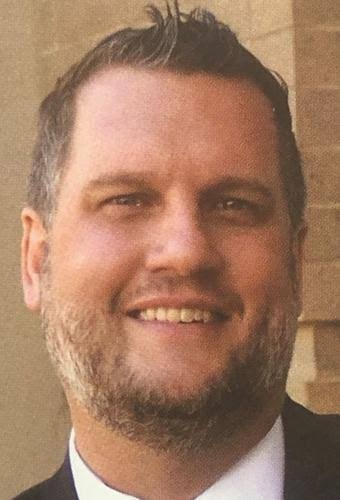
Meet David Taylor
David Taylor led United Way of McLean County through the abrupt loss of more than $2 million in annual revenue (over 65% of its revenue) in two years, after major corporate funders withdrew. That forced a complete redesign, and it led to Workforce180.
Today David helps other communities make that kind of redesign on purpose, before a crisis forces it.
~260%
ROI
$5K–$6K
annual cost per student trained
$1.5M+
annual local economic impact
Why Redesigning Charity
Lived experience
of a major funding collapse
Quantifiable results
from a real redesign
A complete redesign framework
from briefing to sustained success
Where This Comes From
For 18 years, the work was inside State Farm — understanding what a major private funder actually sees when it writes a check to a charity. For 12 years alongside United Way of McLean County, the work was on the other side: watching what happens when the funding cliff arrives and no one has named the stops.
The pattern was consistent. Communities with good intentions, talented people, and real needs — but no price on the work, no scoreboard anyone could read, and no honest conversation about what would still get funded when the public money ran out.
Redesigning Charity exists because that conversation is overdue. Not as a critique. As a path.
Corporate Philanthropy & Community Affairs
State Farm
18 years
Understanding what a major private funder sees, funds, and eventually stops funding — and why.
Leadership & Strategy
United Way of McLean County
12+ years
Operating inside the system: allocations, campaigns, community impact work, and the slow arrival of the funding cliff.
Core Beliefs
Charity should have a price.
Not a budget. A price. The cost of one outcome, for one person, in one year. Communities that can name that number can make decisions. Communities that cannot are guessing.
The funding cliff is not a surprise.
Public money has been shrinking for years. The communities that will navigate it are the ones that started the honest conversation early — not the ones that waited for the crisis.
A Glass Box beats a black box.
When the work is visible — rules, scoreboard, cost, results — contributors can direct it. Young people can see it. Business leaders can invest in it. That is a system worth building.
Business leaders belong in this room.
Chambers, employers, and local investors are not peripheral to this work. They are the constituency that makes a results-based system viable. Redesigning Charity builds engagements for them.
Don't start with a new program. Start with what you would still fund.
The Approach
Every engagement starts with an honest room. A mixed group — business leaders, funders, service partners — names what they would keep and what they would stop. That conversation produces a written record. The record produces a decision. The decision, over time, produces a Glass Box: a local structure with rules, a scoreboard, a host, and a first cohort of young people whose outcomes are public.
Redesigning Charity doesn't run programs. It helps communities design and launch the structure that runs them.
Ready to Name the Stops?
Start with a Pathfinder Call. Twenty minutes to find the door that matches where your community stands.